Japanese culture

About Overcharging and Tourist Scams in Japan
Japan is generally considered one of the safest countries in the world, and most restaurants, shops, taxis, and tourist attractions operate honestly. However, like any major tourist destination, there are occasional cases of overcharging and scams targeting visitors.
Common situations include:
- Bars and clubs in nightlife districts
- Some establishments may charge excessive fees that were not clearly explained in advance.
- Areas such as Kabukicho (Tokyo) and certain nightlife districts in Osaka have occasionally reported such incidents.
- Unlicensed transportation services
- Always use licensed taxis or reputable ride-hailing services.
- Licensed taxis in Japan are required to use meters.
- Unexpected service charges
- Some bars may charge a small seating fee ("otoshi" or table charge), which is a normal custom in Japan.
- If you are unsure, ask about any additional charges before ordering.
How to Avoid Problems
✅ Check online reviews before entering a bar or club.
✅ Avoid establishments where staff aggressively solicit customers on the street.
✅ Confirm prices in advance.
✅ Keep receipts when making purchases.
✅ If something seems suspicious, leave before ordering.
The vast majority of businesses in Japan are trustworthy, and most visitors enjoy trouble-free travel. A little caution is usually enough to avoid unpleasant experiences.
Public toilets
Free to use in Japan.
If there isn't one nearby,look for a convenience store.
You can use it for free without buying any products.
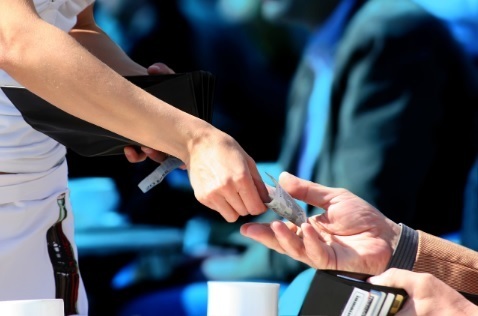
Tipping in Japan
Unlike many countries, tipping is generally not expected in Japan.
Excellent service is considered a normal part of hospitality, so restaurant staff, hotel employees, taxi drivers, and shop staff do not expect additional payment.
Common Situations
️ Restaurants
- No tip is necessary.
- Simply pay the amount shown on the bill.
Taxis
- No tip is required.
- Drivers may politely refuse if you try to leave extra money.
Hotels
- Tipping is usually unnecessary.
- Hotel staff are expected to provide professional service without additional payment.
Traditional Ryokan Inns
- In rare cases, some Japanese guests may offer a small gratuity in an envelope to their personal attendant, but this is completely optional and not expected from foreign visitors.
Important Note
Leaving cash on the table after a meal may confuse staff, who might think you accidentally forgot your money and try to return it to you.
Good Ways to Show Appreciation
A smile
Saying "Thank you"
Saying "Arigatou Gozaimasu" (ありがとうございます)
These gestures are often appreciated more than a tip.
In short: When traveling in Japan, you generally do not need to tip.
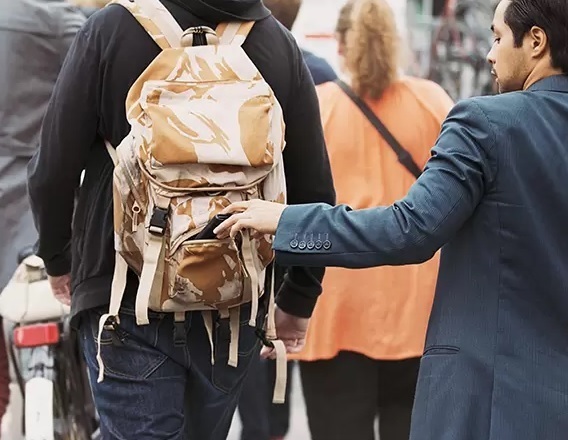
Pickpocketing in Japan
Japan is widely regarded as one of the safest countries in the world. Compared with many major tourist destinations, the risk of pickpocketing is relatively low.
However, pickpocketing can still occur, especially in crowded places such as:
Train stations and busy commuter trains
Festivals and large events
️ Popular shopping districts
Tourist attractions with large crowds
What You Should Know
- Violent theft is very rare in Japan.
- Most visitors never experience pickpocketing during their trip.
- Lost wallets and phones are often returned to their owners, thanks to Japan's strong lost-and-found culture.
How to Stay Safe
✅ Keep your wallet and passport in a secure bag.
✅ Avoid carrying valuables in your back pocket.
✅ Be extra careful in crowded trains and tourist areas.
✅ Keep a copy of your passport and important documents.
✅ Use hotel safes for unnecessary valuables.
If You Lose Something
If you lose your wallet, phone, or bag:
Report it to the nearest police box ("Koban").
Contact the station's lost-and-found office if you were using public transportation.
Ask your hotel staff for assistance.
Many lost items in Japan are successfully recovered and returned to their owners.
Overall, Japan is a very safe destination, but basic precautions are still recommended.
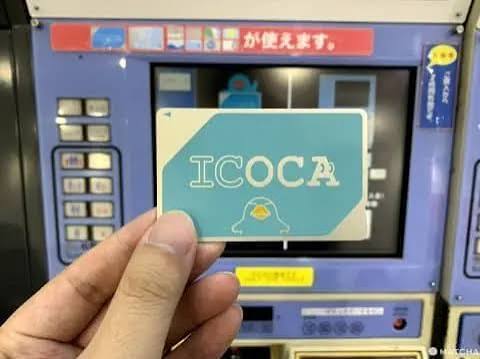
How to Ride Trains in Japan
Japan's train system is famous for being punctual, clean, and easy to use once you know a few basics. Whether you take a JR line, a private railway, or the subway, the process is almost the same everywhere.
Getting an IC Card (Suica / PASMO / ICOCA)
The easiest way to travel by train in Japan is to use a rechargeable IC card such as Suica, PASMO, or ICOCA. These cards can be purchased and charged at ticket machines in most stations, including airports.
How to Get and Charge Your IC Card
1. Find a ticket machine with an IC card mark and switch the screen to "English" if needed.
2. Choose "Purchase a new IC card" (a small refundable deposit may be required).
3. Insert cash to charge the amount you want onto the card.
4. Simply tap the card on the reader at the ticket gate when entering and exiting the station - the fare is calculated and deducted automatically.
You can recharge your IC card at any ticket machine, and the same card works on almost all trains and buses across Japan.
Buying a Paper Ticket
If you prefer not to use an IC card, check the fare chart above the ticket machines, buy a ticket for the correct amount, and insert it into the gate both when entering and exiting the station.
Basic Manners on the Train
Line up in order on the platform and let passengers exit before you board.
Switch your phone to silent mode ("manner mode") and keep conversations quiet.
Priority seats are reserved for elderly passengers, pregnant women, and passengers with disabilities.
Eating and drinking is generally avoided on local trains and subways.
With a little preparation, riding trains in Japan is simple and enjoyable, and an IC card will make your journey even smoother.
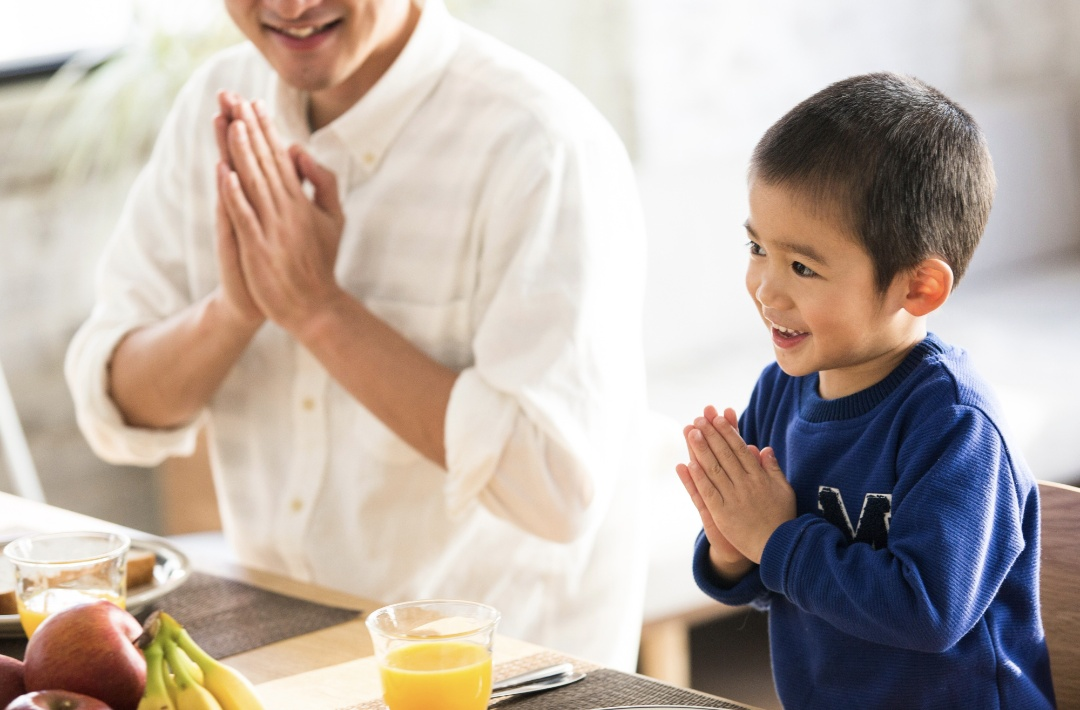
Greetings at meals
Before the meal : "itadakimasu"
After the meal : "gochisousama"
"Itadakimasu"originally expresses gratitude for the bounty of nature that has become the ingredients for the dish.
"Gochisousama"expresses gratitude not only to the person who cooked the meal,but also to those who caught the fish,and everyone else who was involved in getting the meal to the table.

The idea that one should not cause trouble to others
Buddhist teachings.
This idea is widespread in Japan.
For example
●Do not speak loudly on public transport.
●Stand in line in order.
●Don't throw trash on the street.
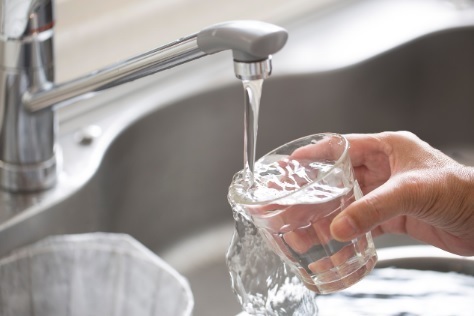
Japan’s Tap Water Is Safe to Drink!
Japan has high-quality tap water, and the tap water at our accommodation is safe to drink directly from the faucet.
Osaka’s tap water is soft water, with relatively low levels of minerals such as calcium and magnesium. This gives the water a clean, mild taste and makes it pleasant to drink.
Soft water is also gentle when washing. Many visitors find that their skin feels soft and their hair feels smooth and easy to manage after using Japanese soft water. The lower mineral content also means less mineral buildup on the hair compared with hard water.
Simply fill your bottle or glass from the tap and enjoy fresh, clean Japanese water.
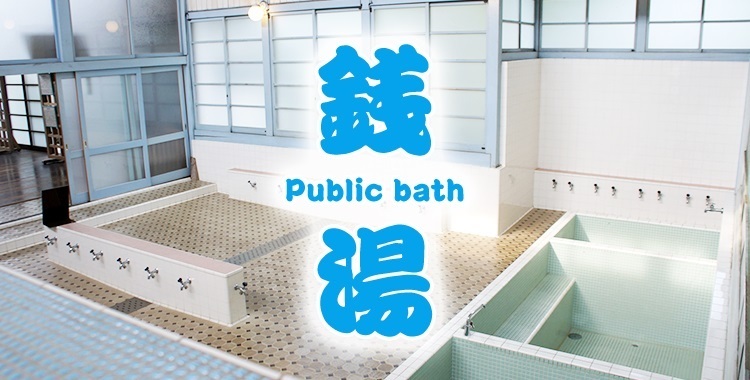
”Sento" Public Bath
A sento is a public bathhouse where customers pay to take a bath.
In Japan, taking a bath is not only for washing the body but also for relaxation and detoxification, which is why people soak in the bathtub.
There are a few basic rules for using Sento
Try a new experience for the first time.
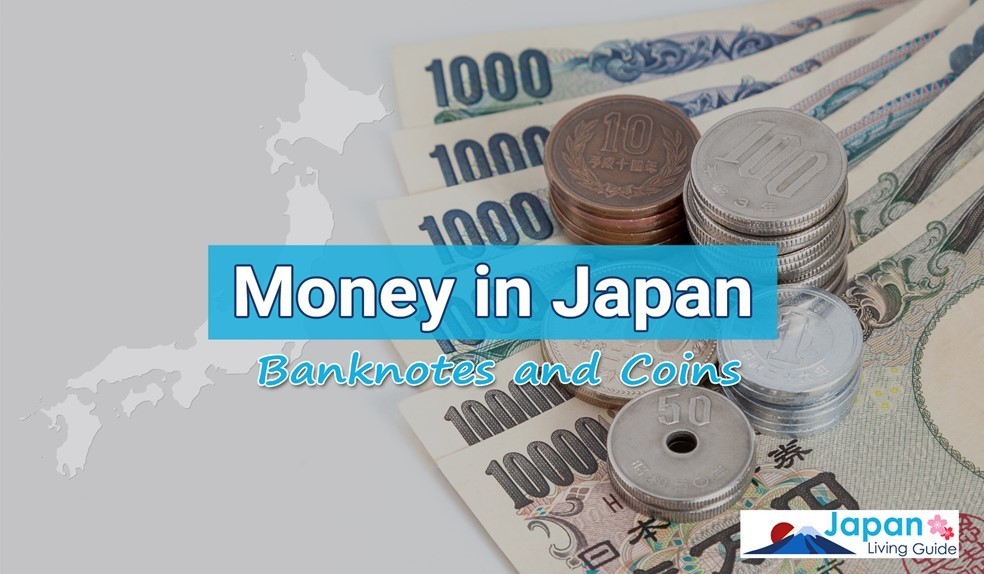
↑Click on the image for details of the money
Money in Japan
It explains the types of money used in Japan.
If you go to countryside,there are small shops where you can only use cash.

One of the Safest Countries in the World
Japan is one of the safest countries in the world.
Even if a woman walks alone at night, it is usually very safe and nothing bad happens.
Of course, it’s always good to stay aware of your surroundings, but in general, Japan is a peaceful and safe place.
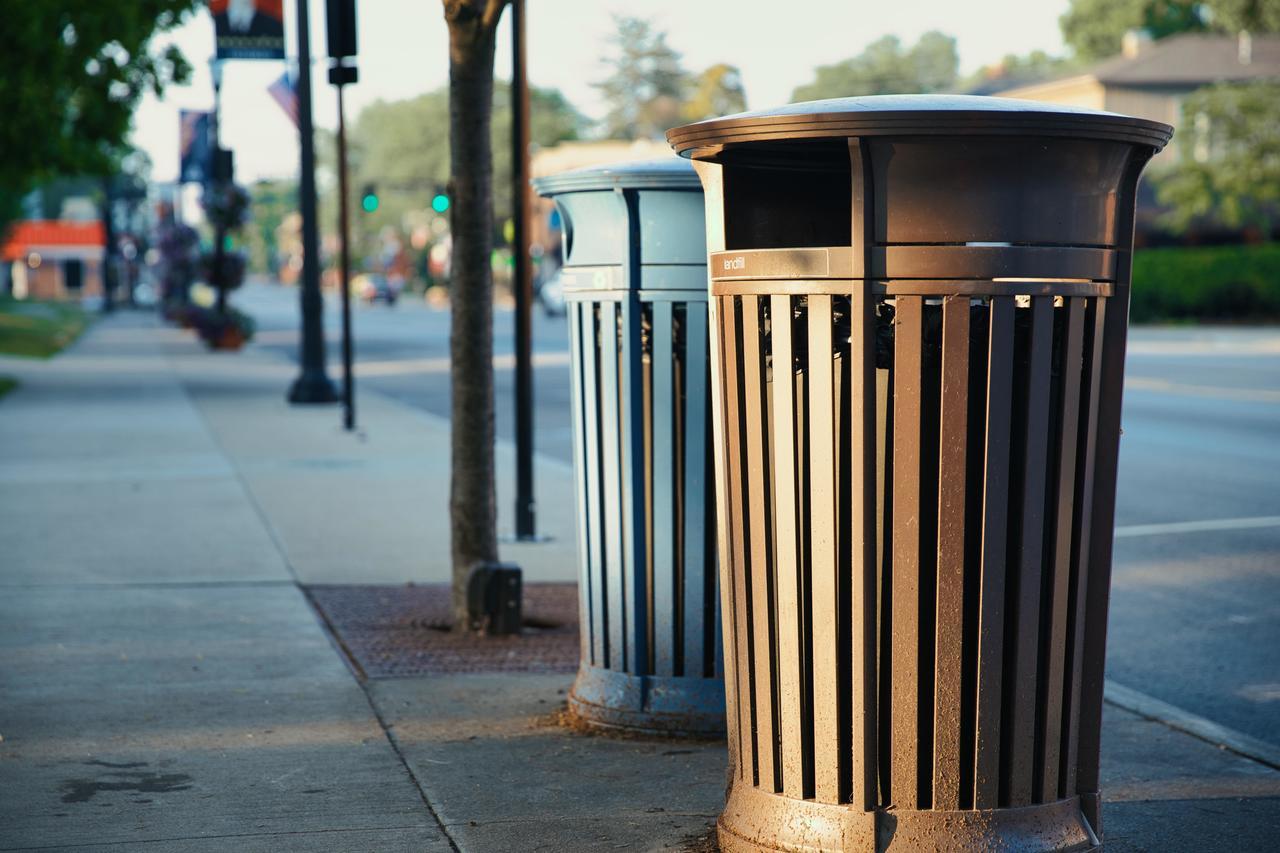
Why You Don’t See Many Trash Bins in Japan
In Japan, you may notice that there are very few trash bins in public places. ️
This is because people in Japan generally take their trash home and dispose of it there. It is part of the culture to keep the streets clean and take responsibility for your own garbage.
If you have trash, please carry it with you until you find a place to throw it away, or take it back to your accommodation.
Please be especially careful when smoking.
Smoking on streets and littering cigarette butts, especially on roads, may result in a fine.
Please do not throw cigarette butts or other garbage on the streets or in public places. Instead, please dispose of them properly in designated areas.
Thank you for helping us keep Japan clean and beautiful!
Enjoy your stay in Japan and help us protect its beautiful streets.
About Osaka's Culture
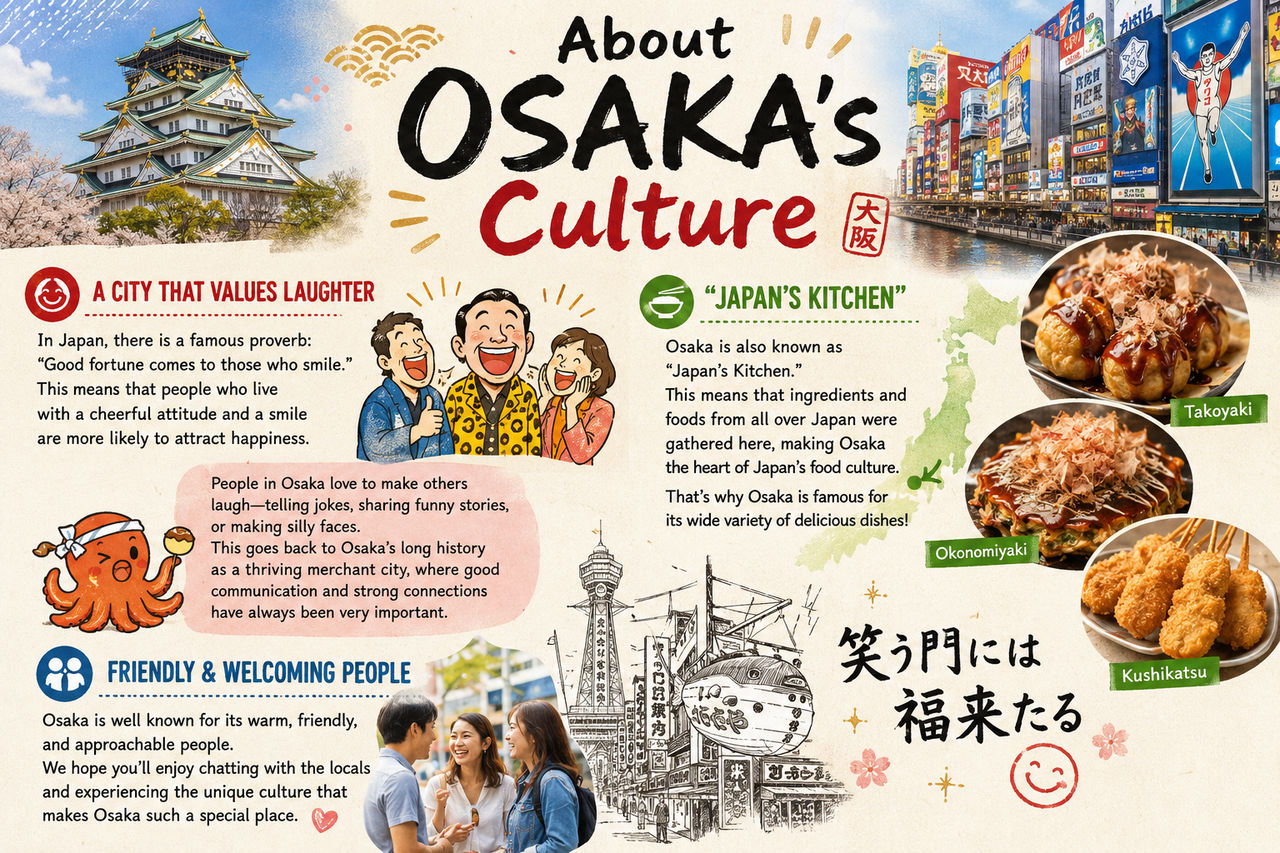
 This means that people who live with a cheerful attitude and a smile are more likely to attract happiness.
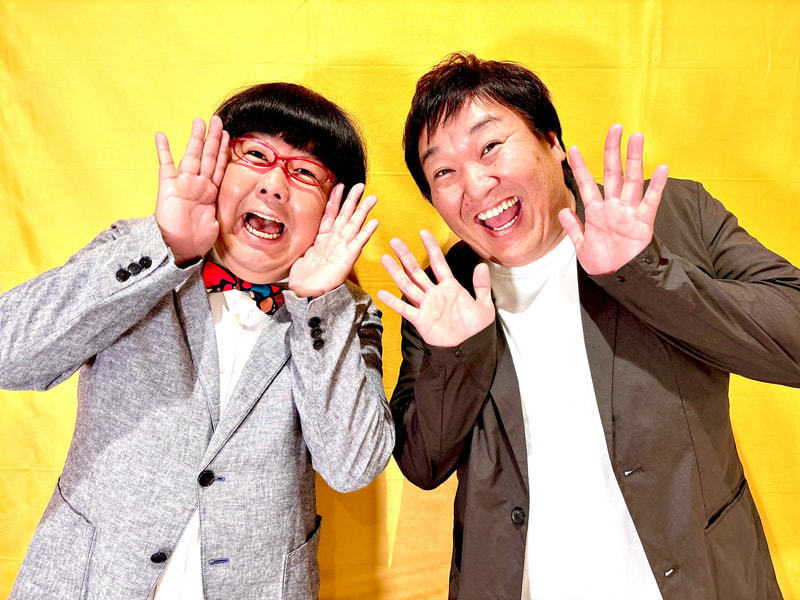
People in Osaka place great importance on laughter and humor. They enjoy telling jokes, making funny faces, and making others laugh. This tradition dates back centuries, as Osaka developed as Japan's center of commerce, where good communication and friendly relationships were essential for business.
Osaka is also known as "Japan's Kitchen." This nickname reflects its history as the place where ingredients and foods from all over Japan were gathered and traded, making it one of the country's most important centers of food culture. Today, Osaka is famous for delicious local specialties such as takoyaki, okonomiyaki, and kushikatsu.
Finally, Osaka is well known for its warm, friendly, and approachable people. We hope you'll enjoy chatting with the locals and experiencing the unique culture that makes Osaka such a special place.
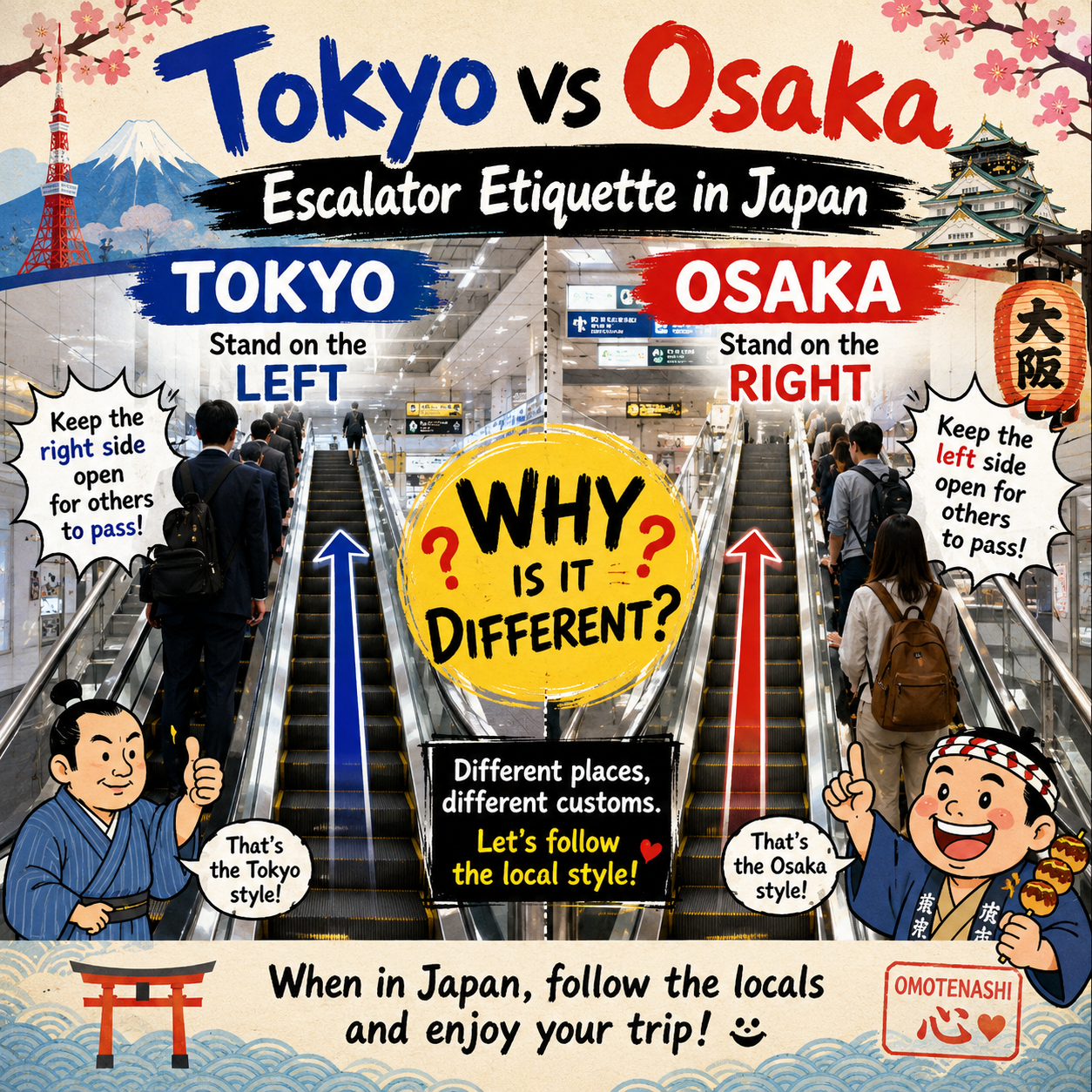
Escalator Etiquette: Tokyo vs. Osaka
Even standing still on an escalator comes with regional rules in Japan! In Tokyo, everyone politely lines up on the left, leaving the right side clear for people in a hurry. But travel to Osaka, and the whole custom flips - people stand on the right instead. Nobody really knows why, but locals will happily joke that Osaka just can't resist doing the opposite of Tokyo, even on an escalator!